

We’re glad you’re here. Each week, we’ll share a short devotional, curated articles & videos, and work through old classic Christian books together. Whether in a quiet morning or on the go, may this post be of edification.
-
Devotional: Faith’s Checkbook – C. H. Spurgeon
-
Curated Resources
-
Book Club: The Christian – William S. Plumer
Why Remain Captive?

“The Lord thy God will turn thy captivity” Deuteronomy 30:3
God’s own people may sell themselves into captivity by sin. A very bitter fruit is this, of an exceeding bitter root. What a bondage it is when the child of God is sold under sin, held in chains by Satan, deprived of his liberty, robbed of his power in prayer, and his delight in the Lord! Let us watch that we come not into such bondage; but if this has already happened to us, let us by no means despair.
But we cannot be held in slavery for ever. The Lord Jesus has paid too high a price for our redemption to leave us in the enemy’s hand. The way to freedom is, “Return unto the Lord thy God.” Where we first found salvation we shall find it again. At the foot of Christ’s cross confessing sin we shall find pardon and deliverance. Moreover, the Lord will have us obey His voice according to all that He has commanded us, and we must do this with all our heart, and all our soul, and then our captivity shall end.
Where we first found salvation we shall find it again. At the foot of Christ’s cross confessing sin we shall find pardon and deliverance.
Often depression of spirit and great misery of soul are removed as soon as we quit our idols and bow ourselves in obedience before the living God. We need not be captives. We may return to Zion’s citizenship, and that speedily. Lord, turn our captivity!
— April 27th, Faith’s Checkbook, Charles H. Spurgeon.
Recommended Resources
Articles
-
What is the Gospel? | Michael Teddy
This article challenges readers to examine whether their understanding of the gospel is truly centered on God or subtly focused on self. Using John 3:16 as a lens, the article contrasts a man-centered theology—where God exists to fulfill personal desires—with a God-centered gospel that emphasizes God’s holiness, justice, and mercy. -
Fathers and the Fatherhood of God | Ashok Mohanakumar
This article reflects on how earthly fatherhood mirrors God’s own paternal nature. Drawing from Scripture, it urges fathers to lead with love, patience, and spiritual guidance, highlighting their vital role in shaping their children’s faith. A helpful read for fathers and leaders seeking to reflect God’s character in family life.
Videos
-
Two Ways to Live | Dr. Joe Rigney
This message thoughtfully explores the path of righteousness and the path of the wicked, highlighting the importance of personal embrace of God’s ways and the temptations to stray.For a thought-provoking perspective on life’s direction, this video is a concise must-watch.
Ebook
-
Expositional Commentary | Dr. R. C. Sproul (FREE)
Dr. Sproul’s expositional commentaries help you understand key theological themes and apply them to all areas of life. Drawn from decades of careful study and delivered from a pastor’s heart, these sermons are readable, practical, and Bible-centered.
Book Club – The Christian
Note: This concise treatise by William S. Plumer examines 30 key aspects of the Christian life with biblical clarity and pastoral wisdom, great for personal reflection. Also, Do check this AI generated audio below for a discussion of the chapter.
Click to Read: Previous Chapter 1
Ch 2: The Christian Profession

In the New Testament the same Greek verb is rendered both confess and profess. In these places it is rendered confess, namely, Matt. 10:32; Luke 12:8; John 1:20; 9:22; 12:42; Acts 23:8; 24:14; Rom. 10:9; Heb. 11:13; 1 John 1:9; 4:2-3, 15; and 2 John 7. In the following places the same verb is rendered profess, namely, Matt. 7:23; 1 Tim. 6:12; Titus 1:16. In like manner the noun is sometimes rendered profession, as in 1 Tim. 6:12; and in the very next verse it is rendered confession.
If there is any difference between a confession and a profession, it is that the former is made in the face of danger, while the latter is a mere setting forth of our belief and practice. Each is an avowal of one’s convictions or of one’s belief. Each is a declaration of what is supposed to be truth.
A Christian profession is called for—
-
By the very nature of the case, Christ’s kingdom is both spiritual and voluntary. If men consent not to serve Him, they are His enemies. If they bow to His yoke, how can they more fitly declare that fact than by avowing their love to Him? If none of Christ’s friends declare for Him, He will soon have no friends in this world.
-
A proper and becoming profession of love to Christ is useful to others. It emboldens timid disciples. It confirms the faltering. It awakes the dull and inattentive. It makes men feel that there is a reality in religion. Very few things are more potent for good, than a solemn profession of Christ’s religion. Many a man has been stout and hardened until he saw his wife, or child, or brother, standing up to take upon them the Christian profession. It was proof of desperate wickedness in the chief priests and elders that when even the publicans and harlots believed John, and these officials saw it, they repented not afterward that they might believe (Matt. 21:32).
-
A Christian profession is commended in the Word of God. It is called “a good profession” (1 Tim. 6:12). It is in itself right, lovely, beautiful, excellent, as the Greek word signifies.
But what is implied in a Christian profession? It is plainly to own the whole truth of God as made known to us.
-
A Christian profession is commanded by Him who has all authority in the case. His word and providence unite in saying: Who is on the Lord’s side? Come out from among them. Be separate, says the Lord. Choose you this day whom you will serve.
-
Very glorious promises are annexed to a right Christian profession, and very awful threatenings are uttered against those who refuse to own the Redeemer. Hear the Savior, who shall be our final Judge: “Whoever therefore shall confess Me before men, him will I confess also before My Father who is in heaven. But whoever shall deny Me before men, him will I also deny before My Father who is in heaven” (Matt. 10:32-33). Compare Luke 12:8-9; Mark 8:38; Luke 9:26; Rom.10:9-10.
But what is implied in a Christian profession? It is plainly to own the whole truth of God as made known to us. To profess any error or falsehood cannot but be dishonoring to God. A good profession clearly implies an adherence to the truth of God. And no lie is of the truth. It is also a declaration of a purpose to observe all God’s statutes and ordinances. There is no piety where there is no keeping of the Commandments. A good profession is always followed by walking in the ways of the Lord, following His example, and framing our doings to please Him and serve His people. And all this is with humble subjection to Christ in all things.
A Christian profession must be—
-
Sincere and hearty. Not only must it not be basely hypocritical, but in it there must not be even self-deception. It must be honestly made. In it must be no reserves, no relentings. A profession of love without love is offensive to every right mind.
-
It must be humble, not vainglorious and ostentatious. Jehu called on men to witness his zeal for the Lord. He was a poor, vain creature.
-
A Christian profession must be open and public. Christ made no secret of His love to us. Why should we make a secret of our love to Him? “Let your light so shine before men that they may see your good works, and glorify your Father who is in heaven” (Matt. 5:16).
A good profession is always followed by walking in the ways of the Lord, following His example, and framing our doings to please Him and serve His people.
-
Our profession should also be bold and fearless. We should not seem to be asking pardon for being followers of Jesus Christ. Paul says: “I am not ashamed of the Gospel of Christ, for it is the power of God unto salvation to everyone who believes” (Rom. 1:16). There is an apologetic way of avowing truth which seems to provoke opposition. We must stand up for Jesus, cost what it may. The life of the truth is more important than the life of any man upon earth. We must resist even unto the shedding of blood, if necessary.
-
A Christian profession is permanent—until death. In this war there is no discharge. “If any man draws back, My soul shall have no pleasure in him,” says God (Heb. 10:38). In this work we have great encouragement. “Let us hold fast the profession of our faith without wavering; for He who promised is faithful.” (Heb. 10:23). How faithful He is, the saints of all ages can testify. His faithfulness never fails. It reaches to the heavens. It is unto all generations.
— The Christian, William S. Plummer
Originally published on Wayfarer's Post.
 New release
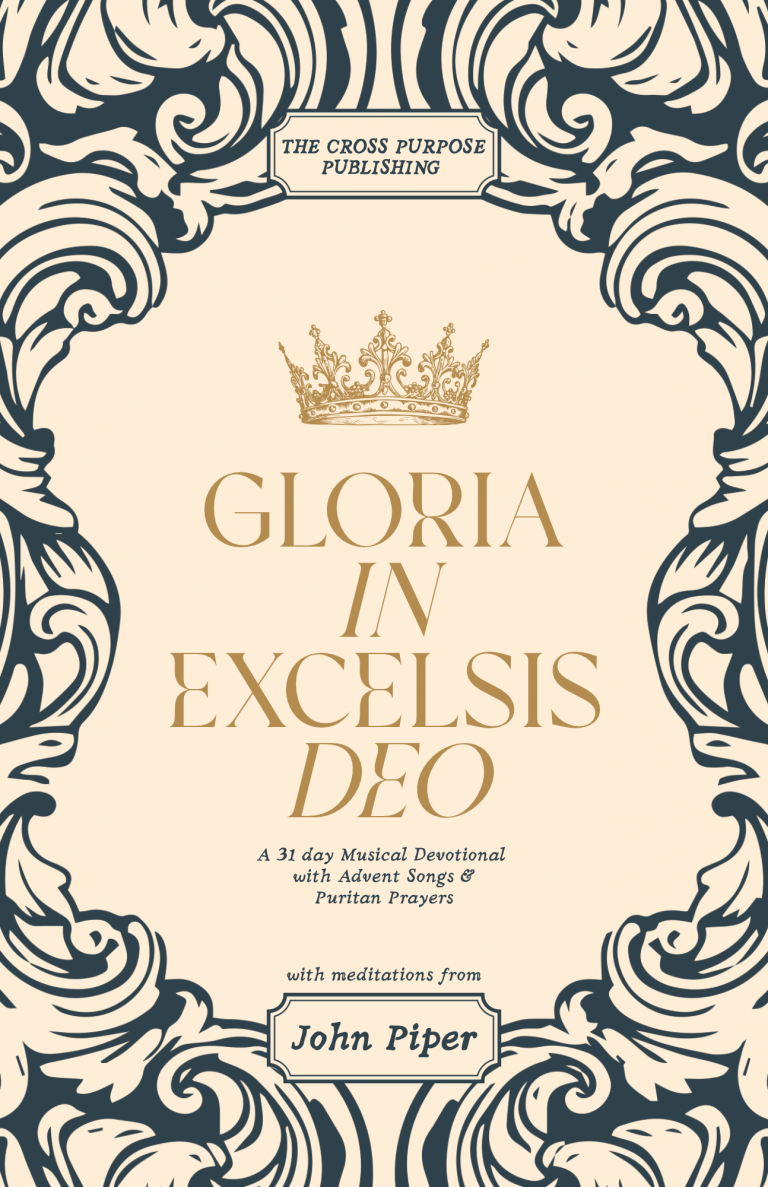
Gloria in Excelsis Deo
In Excelsis Deo is an Advent devotional for those who wish to remember why. Each day begins with an old carol or hymn, because some truths…
Browse the bookstore →
Leave a comment
Please log in to join the conversation — it's free. Don't have an account? Join here.