
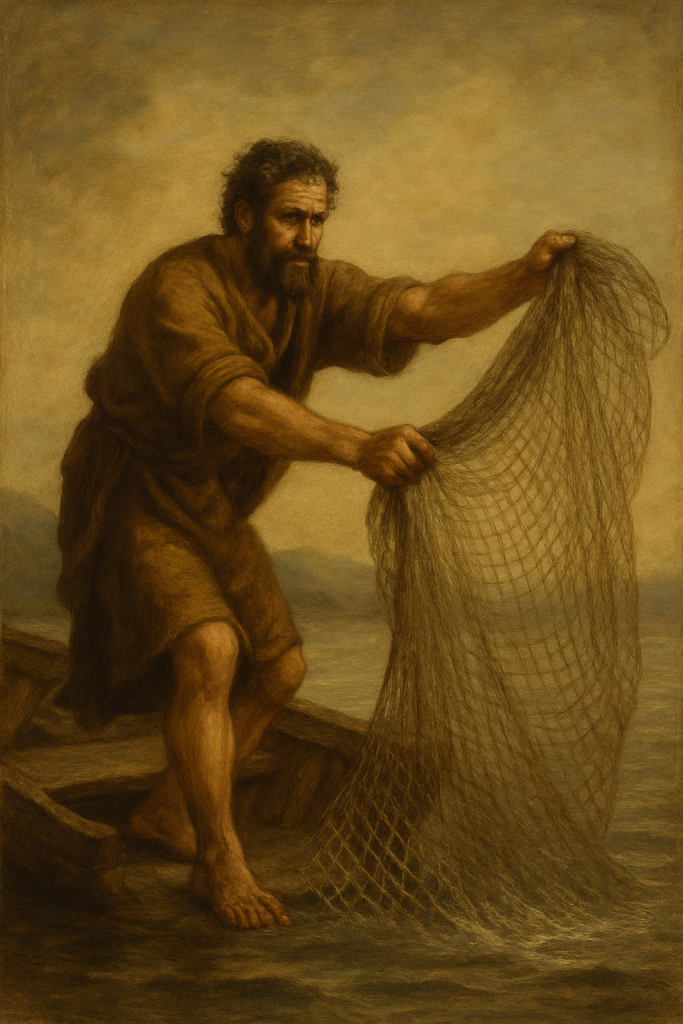
There is a subtle shift that has happened in modern church language. Missions has become a department. Evangelism has become an event. Discipleship has become a course. And somehow, the Great Commission has become the job description of someone else. But Scripture doesn’t give us such categories. The Great Commission is not a slogan for a conference banner. It’s not the fine print in a pastor’s ordination vows. It is the lifeblood of the church.
Jesus didn’t say, “Go into all the world and host worship services.” He didn’t say, “Go to the ends of the earth and plant itenerant ministries.” He said,
“19Therefore go and make disciples of all nations, baptizing them in the name of the Father and of the Son and of the Holy Spirit, 20 and teaching them to obey everything I have commanded you. And surely I am with you always, to the very end of the age.” — Matthew 28:19-20
The text says make disciples and it also says what to do with them (baptize, teach them to obey). So if this is the mission of the church, then Discipleship seems to be at the center of it. It indicates that discipleship is not someting that comes in the aftermath missions. Discipleship is the mission.
What is Missions, Really?
Missions is the church doing what the church has always been called to do—make disciples by proclaiming the gospel and planting churches.
We often reduce missions to sending. But missions is also staying. Every church that is not discipling is disobeying. Whether in a megacity or a rural town, the call is the same: baptize, teach, and build the church on Christ. If your “mission” does not have a church in view, it is not a biblical mission. The modern church has grown strangely uncomfortable to the word “obedience.” We talk about grace, love, inclusion—and all those are glorious truths. But the commission is not merely to convert. It is to teach them to obey all that Christ has commanded (Matt 28:20).
Discipleship is slow work. It involves teaching, walking with the person, encouraging them, confronting their sin and life choices etc. We are not just trying to make people understand Jesus. We are teaching people to follow Him.
If you are a Christian, you are in the Great Commission business. This isn’t for missionaries only. This is not a full-time ministry category. The church is the missionary society of Christ. And that means every member has been called into the mission of making disciples.
“Let us consider how to stimulate one another to love and good deeds…” — Hebrews 10:24 (NASB95)
“Admonish one another…” — Romans 15:14
“Teaching and admonishing one another…” — Colossians 3:16
These are not suggestions for the super-spiritual or the office bearers. This is the air the church breathes. The call to discipleship is not something that can be outsourced to a discipleship pastor or an app with pre-loaded video content. Discipleship cannot happen without the church.
Planting Churches, Not Just Producing Converts
Jesus did not send out apostles to gather crowds. He sent them to plant churches. Churches where baptism, preaching, discipline, fellowship, and communion happen. Churches where elders are appointed. Churches that carry out the “one anothers.” Churches that display the manifold wisdom of God (Eph 3:10). Everywhere the disciples went they planted churches. The goal of missions is not to produce statistics of how many people groups were reached. The goal is not to screen the Jesus movie to hundreds of people and move on to the next village. The goal is healthy, local churches where discipleship takes root and grows fruit over time. We do not want mission fields full of decisions and no disciples. If a community comes to faith but is abandoned by the missionary to move on to the next community, then you have left them defenseless against false teaching, spiritual temptations. The would be without teachers and guides left to fend for themselves.
The local church is the greenhouse where disciples grow. That’s why the church must not be reduced to a Sunday show. The preaching of the Word, the administration of the sacraments, the presence of pastors, and the fellowship of saints—all of this is the structure within which discipleship happens. You do not need a new curriculum or a viral social media plan to make disciples. You need a church that believes the gospel, teaches sound doctrine, and loves people enough to walk with them in weakness, sin, repentance, and hope. And you need Christians who know that discipleship is not optional. It’s the Christian life.
You don’t need a plane ticket to make disciples. You need to walk across the room after Sunday service and have a spiritual conversation. You need to read Scripture with someone who’s struggling. You need to open your home and your heart. Because the church doesn’t need more experts. The church needs ordinary Christians obeying an extraordinary Savior, doing the ordinary work of discipleship—which, in God’s wisdom, is how the kingdom advances.
This is the second in a series of articles on Church and Discipleship.
Originally published on True Doxology.
 New release
Gloria in Excelsis Deo
Once upon a time, the Maker of mountains and oceans, of stars and sparrows, entered the world He had made. The hands that hung the heavens…
Browse the bookstore →
Leave a comment
Please log in to join the conversation — it's free. Don't have an account? Join here.